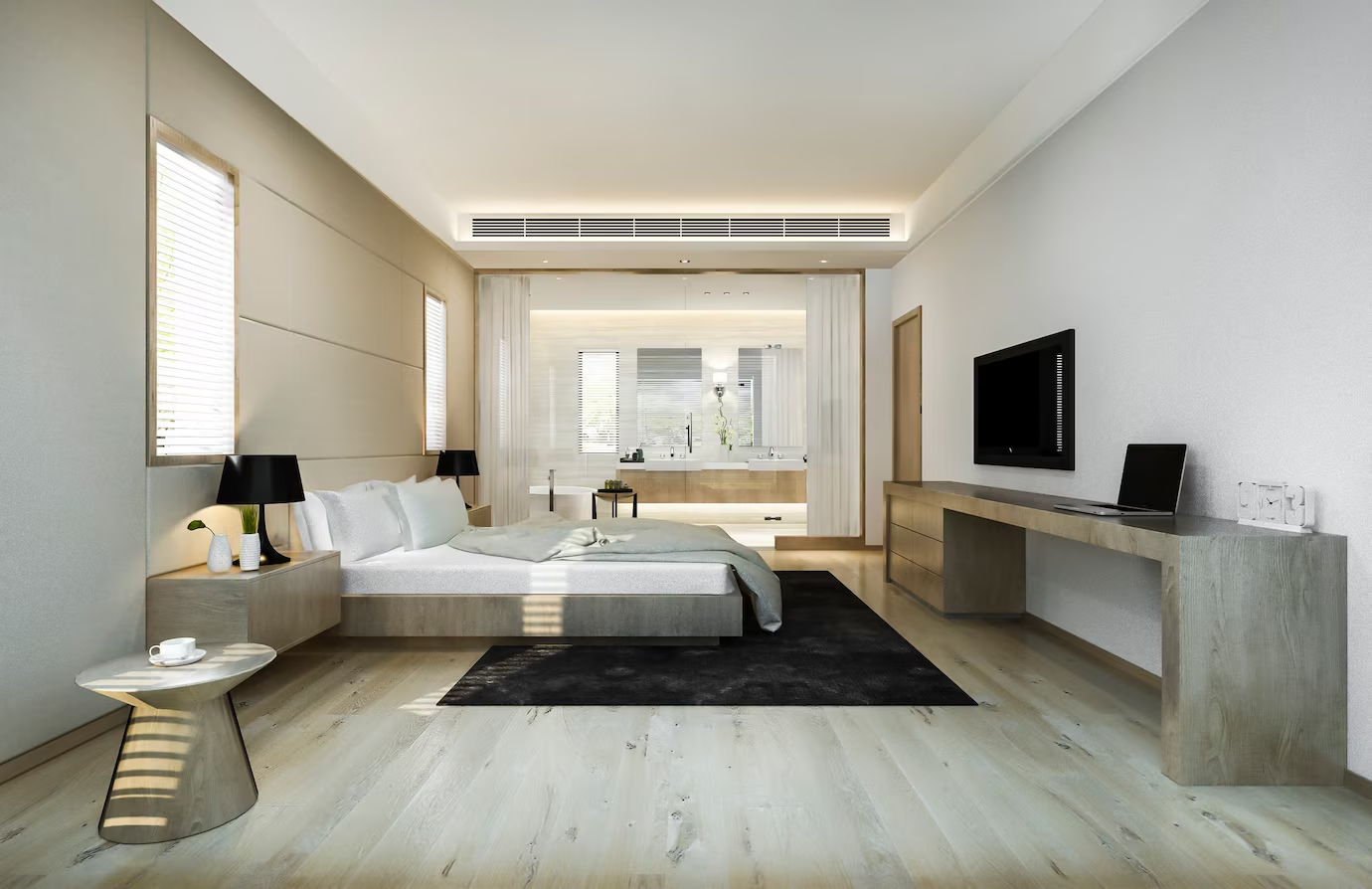
DALI (Digital Addressable Lighting Interface) lighting control systems offer an advanced solution for managing and automating lighting in both commercial and residential spaces. With precise control over individual lights and groups of lights, DALI systems provide enhanced flexibility, energy efficiency, and user convenience.
In this guide, we’ll explain how DALI lighting control systems work, their benefits, and how they can be integrated into your lighting setup.
What is a DALI Lighting Control System?
DALI is an internationally recognized protocol for digital lighting control, enabling communication between lighting fixtures, sensors, and control devices. Unlike traditional lighting systems that rely on manual switches or basic dimming, DALI systems allow for the individual control and programming of lights via a two-way communication system.
DALI systems are often used in large-scale commercial projects, such as offices, hotels, and public buildings, but can also be adapted for home lighting automation.
How Does DALI Work?
DALI systems use a digital signal to control up to 64 individual devices, such as LED drivers, sensors, or dimmers. These devices are all connected on the same network (a DALI bus), which allows for two-way communication. Each light or device on the network has its own unique address, enabling centralized control and monitoring.
Key components of a DALI system include:
- DALI Controllers: These act as the brain of the system, sending commands to the connected lights and receiving feedback.
- DALI Ballasts or Drivers: These are the devices that receive instructions from the controller and adjust the lighting accordingly.
- Sensors and Switches: These allow for automatic control of lights based on movement, daylight levels, or manual input.
Features and Benefits of DALI Systems
DALI lighting control systems provide several unique features and benefits, making them a popular choice for a wide range of applications.
1. Individual and Group Control
One of the key advantages of DALI is its ability to control individual lights or create groups of lights that can be operated together. This is particularly useful in environments where different areas require different lighting settings, such as open-plan offices or multi-purpose spaces.
2. Smooth Dimming
DALI systems allow for smooth and precise dimming across a wide range of brightness levels. This enables users to create the ideal lighting environment for various activities, from bright task lighting to ambient mood lighting.
3. Energy Efficiency
With its advanced dimming and automation capabilities, a DALI system helps reduce energy consumption. Lights can be programmed to dim or turn off when a room is unoccupied, or adjust brightness levels based on the amount of natural light in a space.
4. Customizable Scenes
DALI systems allow users to create and store multiple lighting scenes, which can be recalled with the touch of a button. This is ideal for environments such as conference rooms, restaurants, or homes, where lighting needs can change throughout the day.
5. Two-Way Communication
Unlike simpler lighting systems, DALI allows for two-way communication between the controller and the light fittings. This means the system can provide real-time feedback, such as whether a light is functioning correctly, making maintenance easier.
6. Scalability
DALI systems are highly scalable and can be expanded to include additional lighting devices as needed. This makes it an ideal solution for both small installations and large, complex projects.
Installing a DALI Lighting System
Installing a DALI system typically requires professional expertise, as it involves wiring the DALI bus and configuring the controller and devices. Here’s a simplified overview of the process:
- Plan the Layout: Determine how many devices you need to control and whether they will be managed individually or in groups.
- Connect the DALI Bus: All devices on a DALI network are connected via a two-wire DALI bus. This allows the controller to communicate with every device on the network.
- Address the Devices: Each device on the DALI bus needs to be assigned a unique address. This allows for individual control of each light or driver.
- Program the Controller: Once all devices are connected and addressed, the controller is programmed with the desired settings, such as dimming levels, groups, and scenes.
- Test the System: After programming, test the system to ensure all lights and controls are functioning correctly and that any sensors or switches are responding as intended.
DALI vs. Other Lighting Control Systems
When compared to other lighting control systems, such as 0-10V or DMX, DALI offers more advanced functionality. Here’s how it stacks up:
- DALI vs. 0-10V: While 0-10V systems provide basic dimming and on/off control, DALI offers more precise control and two-way communication, making it better suited for complex projects.
- DALI vs. DMX: DMX is often used for stage and event lighting, where fast, dynamic control is needed. DALI, on the other hand, is better suited for architectural lighting projects due to its ability to control individual fixtures and create customizable lighting scenes.
Conclusion
DALI lighting control systems provide a powerful and flexible solution for both commercial and residential lighting projects. Whether you’re looking to optimize energy usage, automate your lighting, or create a dynamic lighting environment, DALI offers the tools needed to achieve a high-quality, professional finish.
For more information on DALI systems or to explore our range of DALI-compatible products, visit our website or contact our team of experts today.